


Imagine a world where your leads aren’t just numbers! They’re real people, each with unique challenges that your SaaS product can solve.
But how do you transform a curious visitor into a paying, loyal customer? A customer who not only sticks around but becomes a brand advocate.
The secret lies in mastering the SaaS sales funnel.
In the competitive SaaS landscape, having a well-optimized sales funnel isn’t just a luxury; it’s a necessity. It’s the pathway that guides your leads through the journey of discovery, engagement, conversion, and ultimately, retention.
Here’s the key: the journey doesn’t end with a one-time sale. In fact, for SaaS companies, the real magic happens after the first sale, as you turn customers into long-term users, advocates, and even evangelists for your product.
If you’re ready to open-up the full potential of your SaaS business, this guide is for you. We’re diving deep into the SaaS sales funnel, uncovering each stage with actionable insights and strategies that will not only boost your conversions but also keep your customers coming back for more.
Ready to build a sales funnel that not only converts but thrives? Let’s get started!
So, first things first-
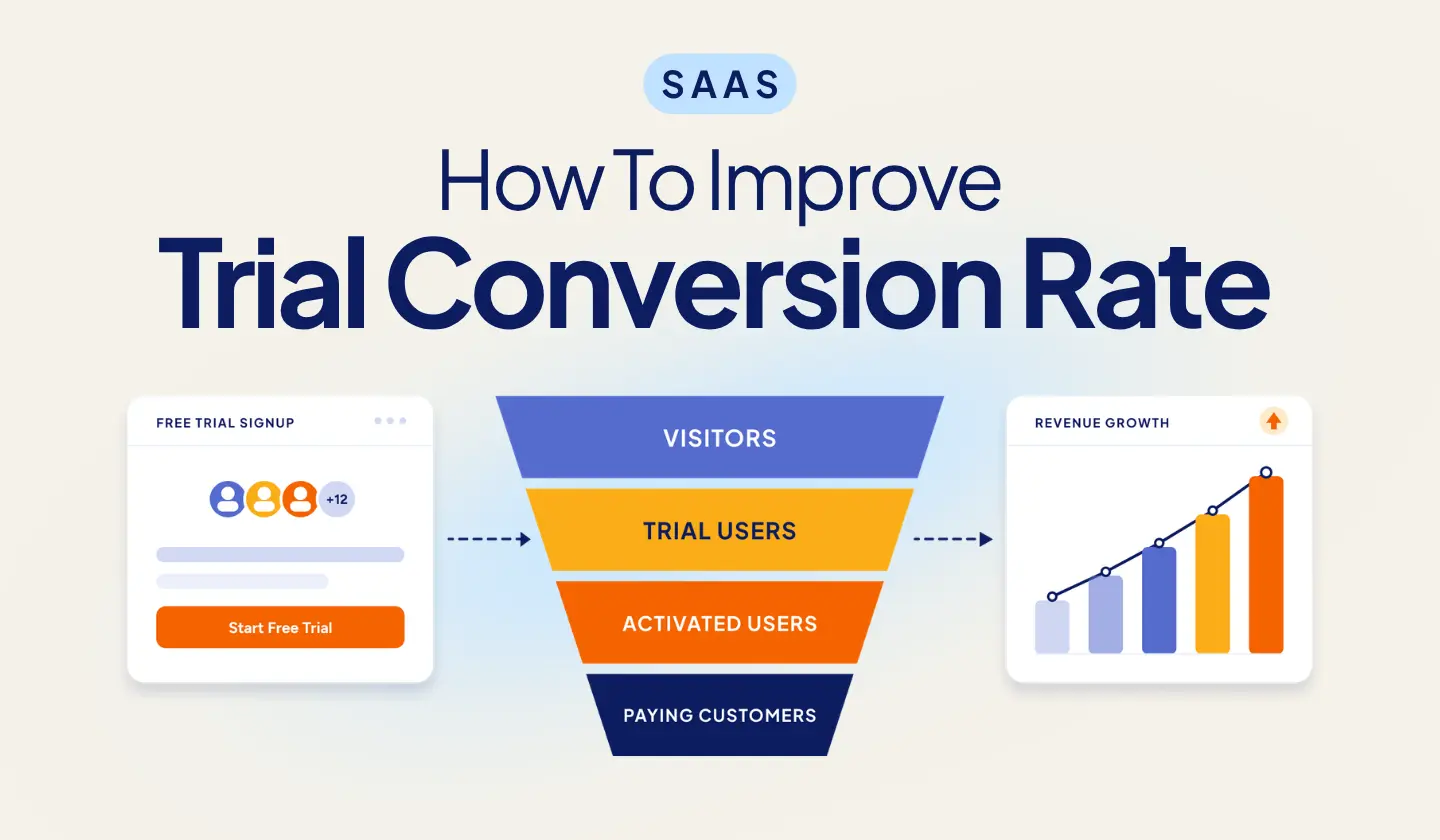
What Is a SaaS Sales Funnel?
A SaaS sales funnel is the blueprint for your entire sales process. From the moment a potential customer becomes aware of your product to the point where they convert and even beyond that, to becoming a loyal, long-term user. It’s a strategic journey designed to foster long-term value and loyalty.
In SaaS businesses, the funnel doesn’t stop at acquisition. It extends to retention, where customer success plays a major role in ensuring that customers don’t churn. Recurring payments and your funnel should be designed to support and reinforce these goals.
Learn More: Top Marketing Strategies for SaaS Companies and Startups in 2025
How a SaaS Sales Funnel Is Different From Other Types of Sales Funnels

A traditional sales funnel focuses on one time sales but SaaS sales focuses on customer retention and long-term.
A traditional process ends once a customer makes a purchase. In contrast, the SaaS sales funnel needs to focus on long-term relationships. You must prioritize customer retention, product usage, and recurring revenue as integral parts of the funnel.
The key differences include:
- Free trials or freemium models that allow prospects to experience the product before committing.
- Actively engaging customers beyond the initial sale.
- Subscription models that turn one-time purchases into ongoing relationships.
- Customer feedback loops that inform product enhancements and strengthen retention.
This unique structure makes it crucial to optimize every stage, not just to convert leads, but to retain them for future renewals and upgrades.
How to Create a SaaS Sales Funnel That Works
To make a sales funnel for SaaS, do the following: Know who your ideal customer is and what their problems are. Then, raise awareness by making content, marketing your brand, and so on. Next, nurture your leads by staying in touch and sending helpful reminders. Finally, get them to take action by turning their interest into action.
It can seem hard to build a sales funnel, but it doesn’t have to be. Think of it as making a clear, easy-to-follow path that leads someone from finding your product to being a happy customer. It’s not just about making a sale; it’s about developing a relationship.
Let’s go over the four phases to establishing a funnel that really works for your SaaS firm.
Step 1: Know Who You’re Talking To
To get anyone’s attention, you need to know exactly who your target customer is. If you try to sell to everyone, you won’t be able to sell to anyone.
- Define the type of customer you want: Who are these people? What is the name of their job? What kind of business do they work for? Are you trying to reach small company owners or management at big companies? Be clear. Learn about lead generation companiess for small businesses and hire one.
- Know What They’re Going Through: What problems are they having that your program can help with? It’s not just a tool; it’s a solution. Knowing what hurts them helps you connect with them as people.
- Find out where they are: What do these people do on the internet? Do they use LinkedIn, certain forums, or industry blogs? This advises you where to put your energy.
Step 2: Let People Know You’re There
This is the top of your funnel, where people who might want to buy from you first learn about you. You don’t want to be overbearing; you want to be helpful and instructive. You want to create trust and give value right away.
- Create content that helps: Create and publish blogs, tutorials, or webinars that talk about the challenges your ideal consumers have. A good place to start would be a post called “5 Common Bookkeeping Mistakes Small Businesses Make” if you offer accounting software.
- Be easy to find: Make sure people can find your information when they look for answers on Google by using SEO. Think about the words people would use to search for something and make your content based on those words.
- Be active in social media: Post your content to the sites where your audience spends time. Talk to people, answer their questions, and make a community.
Step 3: Take care of your leads
A lead is someone who has shown interest in your business, such as downloading a guide or signing up for your newsletter. Your duty now is to keep that interest going and strengthen the relationship. This is where you explain to them why your product is the best choice.
- Make good use of email: Create a series of automated, polite emails. Give them a detailed case study, provide success stories from previous clients, or invite them to a product demo. Every communication should provide them something more and help them get closer to making a choice.
- Give a free trial or demo: This is a big deal for a SaaS product. People can try out your program for free and see how useful it is without having to buy it. It’s the best way to “try before you buy.”
Step 4: Make Interest Happen
Your lead is now well-informed and thinking about your product. At the bottom of the funnel, you need to make it as easy and appealing as possible for customers to buy something.
- Make sure your prices are clear: Make your pricing page clear and easy to read. Be honest about what each plan contains. People may leave if they are confused at this point.
- Make the purchase easier: Make sure that signing up and paying for things is quick and easy. Get rid of any steps that aren’t necessary and could make things harder.
The trip doesn’t end when they buy. It’s really important to have a smooth onboarding process that lets people get started and experience value right away. This is your first chance to turn a new customer into a fan for life.
What Are the Key Stages of a SaaS Sales Funnel
The 7 stages of a SaaS sales funnel are awareness, evaluation, decision, purchase, retention, upsell/cross sell and advocacy. A SaaS sales funnel is more than just a process of acquiring customers. It’s a structured journey that guides leads through each stage of engagement.
It moves prospects from initial curiosity through conversion and on to long-term loyalty. To create a high-performing SaaS sales funnel, you need to understand each stage. You also need to strategically address your prospects’ needs at every stage.
Let’s explore each stage and share practical tools and strategies to help you turn leads into loyal customers.

Stage 1: Awareness – Attracting the Right Audience
At the top of the funnel (TOFU), your goal is to generate awareness and spark interest in your SaaS solution. This is where potential customers first become aware of your SaaS product. Here, the aim is to drive as much relevant traffic as possible to your website and other marketing platforms. Without a strong awareness stage, your funnel lacks the foundation to generate meaningful engagement.
Actions to Take:
- Content Marketing: Create high-value content that resonates with the pain points of your target audience. Examples include blog posts, case studies, white papers, and infographics. Content should be informative, solution-oriented, and shareable.
- SEO: Optimize your content for search engines by focusing on the right keywords and topics that your target audience is searching for. Long-tail keywords and developer-centric terms (for tech SaaS) can drive highly relevant traffic.
- Paid Advertising: Use platforms like Google Ads, Facebook, and LinkedIn to run ad campaigns tailored to search intent. For B2B SaaS, LinkedIn Ads are particularly effective for reaching decision-makers.
- Referral Traffic: Participate in online communities (e.g., developer forums, Reddit, or Quora) where your target audience hangs out. Answering questions or contributing thought leadership can generate awareness and drive traffic.
Metrics to Track:
- Click-through rate (CTR): How effective your ads and organic content are at attracting clicks.
- Website traffic: The volume of visitors landing on your website.
- Social media engagement: Interaction rates (likes, shares, comments) on your posts.
- Organic search rankings: Where your website ranks for relevant keywords.
Stage 2: Evaluation – Nurturing Leads and Building Trust
Now that you’ve captured the attention of your prospects, it’s time to get them to evaluate your solution. The evaluation stage is where potential customers compare your SaaS offering to other solutions in the market. At this point, trust is the key to conversion.
Actions to Take:
- Free Trials and Demos: Allow prospects to test drive your product. Free trials or freemium models are great ways to help prospects experience the value of your product firsthand. Make the trial as easy and seamless as possible.
- Case Studies and Testimonials: Share success stories and case studies. Demonstrate how your product has helped similar businesses. Include testimonials from happy customers to build trust.
- Product Comparisons: Provide comparison charts or tools. These help prospects evaluate how your product stands out from the competition. Focus on your unique selling points (USPs) to differentiate your offering.
- Sales Calls/Live Demos: Offer personalized product demos or consultations to answer questions and address objections. Use these opportunities to educate prospects on features that directly solve their problems.
Metrics to Track:
- Lead response time: How quickly your sales team responds to inbound leads.
- Time spent on key pages: How long prospects are spending on trial sign-up pages or product features.
- Trial-to-paid conversion rate: The percentage of users who convert from a free trial to a paid plan.
- Engagement with customer success content: Tracking views and interactions with case studies, comparison charts, etc.
Stage 3: Decision – Turning Prospects Into Paying Customers
By the time prospects reach the decision stage, they’ve evaluated your product and are now deciding whether to purchase. At this stage, it’s all about removing barriers and making the final push to convert leads into paying customers.
Actions to Take:
- Urgency and Scarcity: Introduce time-limited discounts or exclusive offers for first-time buyers. Using urgency tactics like limited-time offers can trigger action.
- Tailored Follow-ups: Send personalized, tailored emails that speak directly to their concerns. Highlight the value they’ll get from becoming a paying customer.
- Streamlined Checkout Process: Ensure the purchasing process is intuitive and free of obstacles. Offer multiple payment options (credit cards, PayPal, etc.), and make the checkout page simple.
- Offer Incentives: For higher-value products, consider offering additional resources or extended support to make the purchase feel even more valuable.
Metrics to Track:
- Conversion rate: The percentage of leads who become paying customers.
- Sales cycle length: The average time it takes to move a lead from the top to the bottom of the funnel.
- Email open and click-through rates: How effective your personalized follow-up emails are at engaging prospects.
Stage 4: Purchase – Seamless Onboarding and Transaction
At this stage, your prospects have made the decision to buy. Now, the goal is to delight them and get them up and running with your product as quickly and smoothly as possible.
Actions to Take:
- Onboarding Support: Provide a personalized onboarding experience. This can include automated welcome emails, video tutorials, and live training sessions. Help customers understand how to get the most value from your product.
- Thank You Page and Email: After the purchase, send a thank you email with next steps. This can include links to important resources, help guides, or a direct link to customer support.
- Upsell Opportunities: Offer relevant upsell or cross-sell opportunities once customers are familiar with the product. This could include advanced features, more user accounts, or premium plans.
Metrics to Track:
- Revenue from new customers: The amount of revenue generated from newly converted leads.
- Customer satisfaction (CSAT): Gather feedback through surveys to assess the initial user experience.
- Onboarding completion rate: The percentage of new customers who complete onboarding within a certain period.
Stage 5: Retention – Keeping Customers Engaged and Loyal
The retention stage is where SaaS businesses can make or break their success. Retaining customers is more cost-effective than constantly acquiring new ones. It’s essential for maximizing recurring revenue and business sustainability. The longer a customer stays with your product, the more valuable they become.
Actions to Take:
- Customer Success Teams: Proactively engage with customers through customer success teams. This team can help troubleshoot, address issues, and guide users toward getting the most value from your product.
- Educational Content: Provide ongoing education through webinars, tutorials, and advanced feature guides. This can help users stay engaged and increase product usage.
- Feedback Loops: Regularly collect feedback from users to identify potential issues before they lead to churn. Use Net Promoter Score (NPS) surveys to gauge customer loyalty.
Metrics to Track:
- Churn rate: The percentage of customers who cancel their subscription.
- Customer lifetime value (CLTV): The total revenue a customer generates throughout their subscription.
- Customer engagement: How often customers use the product and engage with educational content.
Stage 6: Upsell/Cross-Sell – Increasing Customer Value
Once customers are onboard, it’s time to maximize their lifetime value. Upselling and cross-selling can help you increase revenue while adding more value for your customers.
Actions to Take:
- Data-Driven Upsell Offers: Use usage data to make relevant upsell or cross-sell suggestions. For example, if a customer is using the basic plan and has reached certain usage limits, suggest upgrading to a higher tier.
- Exclusive Deals for Existing Customers: Offer special discounts on premium features or additional services to entice current customers.
- Bundling Products: If you offer multiple SaaS products, create bundled offers to encourage customers to purchase additional products.
Metrics to Track:
- Upsell conversion rate: The percentage of customers who accept upsell or cross-sell offers.
- Average revenue per user (ARPU): The average amount of revenue generated per user.
Stage 7: Advocacy – Turning Customers Into Advocates
The advocacy stage is when your customers become your best marketers. Referral marketing and word-of-mouth are powerful tools for growing your customer base.
Actions to Take:
- Referral Programs: Create a reward-based referral program that incentivizes customers to refer others to your product. Offer discounts, extra features, or other perks for successful referrals.
- Encourage Reviews and Testimonials: Ask happy customers to share reviews on platforms like G2, Capterra, or Trustpilot. User-generated content can boost your credibility and attract new customers.
- Engage in Social Communities: Foster a community where users can share tips, ask questions, and provide feedback. Communities not only engage customers but also strengthen brand loyalty.
Metrics to Track:
- Referral conversion rate: How many customers successfully refer new users to your product.
- Social media mentions: Track how often your product is mentioned or discussed on social platforms.
Read More: Best Facebook Ad Audiences for Each Stage of Your Marketing Funnel
How to Measure the Success of Your SaaS Funnel
To effectively optimize your SaaS sales funnel, it’s essential to track the right metrics at each stage such as acquisition, activation, retention, revenue and referral. These metrics will not only help you understand your funnel’s performance but also provide actionable insights into where you need to improve. Without data-driven decision-making, any optimization efforts may fall short.

What Are the Key SaaS Funnel Metrics:
1. Acquisition Metrics:
- Website Traffic: How many people visit your site from different channels (organic search, paid ads, social media, etc.)? More traffic means greater awareness of your SaaS product.
- Organic Lead: How much organic leads you have generated through the process, count every single ones and nurture leads properly.
- Click-Through Rate (CTR): The percentage of people who click on your ads or content relative to the total number of impressions. This indicates the effectiveness of your ad copy or content in attracting attention.
- Cost per Click (CPC): The average cost of each click in your paid campaigns. It helps you evaluate the cost-effectiveness of your paid ads.
Tools to Use:
- Google Analytics: To track traffic sources, user engagement, and behaviors on your website.
- Facebook Ads Manager: For paid campaign performance tracking.
- Google Ads: To evaluate the effectiveness of your ad spend.
2. Activation Metrics:
- Free Trial Sign-ups: How many prospects are converting to trial users? This is a key indicator of interest in your product.
- Feature Engagement: How often do users interact with the key features of your product? High engagement means users are seeing value and are more likely to convert.
- Account Creations: The number of accounts created on your platform during the trial period. This reflects interest and readiness to explore your product.
- Activation Rate (AR): AR is calculated as the number of users who engage with your product meaningfully (e.g., completing a key action in your product) divided by the total number of users who signed up for a trial. The higher the activation rate, the more likely your users are to convert.
Tools to Use:
- Mixpanel: For tracking product feature usage and user behavior.
- Intercom: To track user engagement within the product and create personalized messages based on actions.
3. Retention Metrics:
- Churn Rate: This is the percentage of users who stop using your SaaS product within a given period. A high churn rate indicates issues with user satisfaction or engagement.
- Customer Satisfaction Score (CSAT): A direct measurement of how satisfied users are with your product. You can collect CSAT data through surveys or feedback tools.
- Monthly Recurring Revenue (MRR): This metric tracks the predictable revenue generated from your subscriptions each month. It’s a crucial indicator of financial stability and growth.
Tools to Use:
- ChartMogul: To track and analyze MRR and churn metrics.
- Zendesk: To collect and analyze customer feedback for CSAT.
4. Revenue Metrics:
- Average Revenue Per User (ARPU): This metric tells you how much each customer contributes to your revenue on average. ARPU is a good measure of your business model’s efficiency in monetizing customers.
- Customer Lifetime Value (CLTV): CLTV is a key metric that indicates how much revenue you can expect from a customer. A high CLTV suggests strong retention and upsell opportunities.
- Conversion Rate (Trial to Paid): The percentage of free trial users who convert into paying customers. Optimizing this metric should be a top priority for SaaS businesses.
Tools to Use:
- Baremetrics: For tracking MRR, ARPU, and CLTV.
- ProfitWell: To analyze and track customer revenue data and subscription performance.
5. Referral Metrics:
- Referral Conversion Rate: The percentage of referred users who eventually become paying customers. This is important if you’re running a referral program.
- Net Promoter Score (NPS): This is a survey-based metric that indicates how likely your customers are to recommend your product to others. A high NPS means your customers are happy and willing to refer others.
- Social Media Mentions: Tracking mentions of your SaaS product across social media platforms. This can be an indicator of organic advocacy and brand recognition.
Tools to Use:
- ReferralCandy: To measure the effectiveness of referral programs.
- Mention: To track mentions of your brand on social media and websites.
Advanced Strategies to Optimize SaaS Sales Funnel
To stay ahead in the competitive world of SaaS, you need to constantly optimize your sales funnel. Here are advanced strategies that can help you scale your SaaS business, enhance conversions, and boost customer retention.
1. Personalization at Every Stage of the Funnel
Personalization is no longer just a nice-to-have; it’s a must for SaaS businesses that want to engage users and improve conversion rates. Customers expect products and services that cater specifically to their needs.
Strategies to Implement:
- Behavioral Targeting: Use user data to send personalized emails based on their behavior. For instance, if a user shows interest in a specific feature but hasn’t used it yet, send a targeted email highlighting how that feature can solve their problem.
- Dynamic Landing Pages: Create customized landing pages based on the user’s journey. If a visitor is coming from a paid ad, show them the benefits that align with what they clicked on. If they’re returning after signing up for a free trial, display a message about converting to a paid plan.
Tools to Use:
- HubSpot: For email marketing automation and personalized lead nurturing.
- Optimizely: To create dynamic landing pages tailored to different user segments.
2. Lead Scoring and Segmentation
Effective lead scoring allows you to prioritize leads who are more likely to convert into paying customers. This enables your sales team to focus on high-value leads and spend less time chasing low-potential prospects.
Strategies to Implement:
- Behavioral Scoring: Assign scores to leads based on their actions, such as visiting high-conversion pages, starting a trial, or engaging with emails. The more engaged they are, the higher their score.
- Segmentation by Persona: Divide your leads based on user personas (e.g., SMBs, enterprises, developers) to ensure that messaging is tailored to their needs.
Tools to Use:
- Salesforce: For advanced lead scoring and segmentation.
- ActiveCampaign: To automate lead scoring and segmentation based on user behavior.
3. AI and Machine Learning for Funnel Optimization
Artificial intelligence (AI) and machine learning can revolutionize how you optimize your SaaS funnel. These technologies analyze vast amounts of data to predict customer behavior. They also automate lead scoring, and personalize user interactions at scale.
Strategies to Implement:
- Predictive Analytics: Use AI to predict which users are most likely to churn. Also, which products or features are likely to generate upsells, and which leads are more likely to convert.
- Automated Chatbots: Deploy chatbots to handle user queries at scale, offer instant help, and engage visitors in real time, pushing them down the funnel.
Tools to Use:
- Pega: For AI-driven customer engagement.
- Drift: For chatbot-driven customer interaction and lead qualification.
4. A/B Testing and Continuous Optimization
Optimizing your SaaS funnel is an ongoing process. A/B testing is one of the best ways to measure what works and what doesn’t.
Strategies to Implement:
- Test Call-to-Actions (CTAs): Test different versions of your CTAs across the funnel to see which one converts the most visitors into leads or paying customers.
- Landing Page Testing: A/B test your landing pages to improve conversion rates. Experiment with copy, images, and the overall layout.
- Email Campaign Testing: Test different subject lines, content formats, and sending times to maximize your email engagement.
Tools to Use:
- Unbounce: For A/B testing and optimizing landing pages.
- VWO: For running A/B tests across your website and funnels.
5. Customer Success and Retention Focus
While acquisition is important, retention is the real key to sustainable SaaS growth. Focus on creating a customer success strategy that adds value to users long after they convert.
Strategies to Implement:
- Proactive Customer Support: Instead of waiting for customers to reach out with issues, be proactive. Checking in with the users to ensure they’re having a great experience.
- Customer Onboarding: Ensure that new customers go through a well-defined onboarding process. The process that sets them up for success with your product.
- Loyalty Programs: Reward long-term customers with discounts, exclusive features, or early access to new products.
Tools to Use:
- Zendesk: For streamlined customer support and engagement.
- Gainsight: For creating proactive customer success strategies.
What Are the Common Mistakes in SaaS Sales Funnels and How to Avoid Them
- Mistake 1: Not Vetting Leads Properly.
- Mistake 2: Ignoring Retention: Retaining existing customers is more profitable than constantly acquiring new ones.
- Mistake 3: Not Asking for Feedback: Use customer feedback to improve your product and services.
- Mistake 4: Undefined Funnel Stages: Clear funnel stages are critical for optimizing the customer journey.
Conclusion
When it comes to your SaaS sales funnel, think of it like a long-term relationship rather than a quick transaction. It’s not just about attracting leads or making the initial sale. It’s about creating value at every touchpoint, building trust, and delighting your customers.
The real momentum builds after the first sale — when retention, upselling, and advocacy begin to drive growth.
Optimizing your funnel is a dynamic, ongoing process. It’s about understanding where your customers are at each stage and using that knowledge to offer them the best possible experience.
Whether it’s personalizing communication, leveraging AI, or making the purchase process smooth, every small improvement can drive your business toward sustained growth.