In today’s fast-paced B2B market, outbound sales remains a key driver of predictable revenue growth. Research shows that over 70% of B2B buyers want to hear from sales reps early in their journey, and companies using outbound strategies generate up to 40% more qualified leads than those relying only on inbound.
This guide explains how B2B outbound sales works and how to build a scalable, personalized process that consistently fills your pipeline. You’ll learn proven outreach strategies for cold emails, calls, and multi-channel campaigns, plus how to craft messages that convert, measure performance, and avoid common mistakes.
By the end, you’ll have a clear roadmap to reach decision-makers, earn more replies, and close deals with confidence.
What Is B2B Outbound Sales?
B2B outbound sales is the process of proactively reaching out to B2B companies to introduce your products or services and initiate meaningful sales conversations. It involves identifying target accounts, contacting them through channels such as email, phone, or LinkedIn, and guiding them toward a potential purchase decision.
This approach is different from inbound because you do not wait for leads to come to you. You research, reach out, and help the buying group make progress faster. When done right, outbound creates predictable opportunities.
Learn: How to Generate Leads in B2B Sales
How to Build a B2B Outbound Sales (Step-by-Step Process)
A B2B outbound sales process is a step-by-step system for identifying potential buyers, reaching out proactively, and converting them into customers through targeted communication. Building this system effectively often requires a strong B2B lead generation strategy that combines targeting, data enrichment, outreach, and qualification. Unlike inbound sales, where leads come to you, outbound sales puts your team in control, helping you find the right companies, start meaningful conversations, and build predictable revenue.
By following a structured process that includes defining your Ideal Customer Profile (ICP), crafting personalized messaging, using multiple outreach channels, and optimizing performance with data, you can scale your pipeline efficiently and close deals faster.
1. Define Your Ideal Customer Profile (ICP)
Every successful B2B outbound sales process starts with clarity about who you’re selling to. Your ICP is a data-backed description of the companies most likely to benefit from your product.
To define it, analyze your past wins and losses. Look for patterns in company size, industry, growth stage, geography, and buying triggers. Identify not only who buys quickly, but who stays the longest and gets the most value.
This focus prevents wasted effort and allows your sales team to personalize outreach with precision. When you know your ideal customers’ exact pains and goals, every message you send feels more relevant.
2. Build and Enrich Prospect Lists
Once your ICP is set, build a list of companies and contacts that fit it. Use sales intelligence tools such as ZoomInfo, LinkedIn Sales Navigator, or SalesIntel to find verified information like job titles, email addresses, and phone numbers. Many companies use professional lead generation services to build accurate prospect lists and identify qualified decision-makers.
Clean and verify your data to avoid bounces and spam flags. A strong lead list is the foundation of every outbound campaign. It determines who receives your message and how likely they are to respond. Remember, good data saves time and bad data kills productivity.
3. Map the Buying Committee
In B2B, purchasing decisions rarely rest on one person. A company may have multiple stakeholders, decision makers, budget owners, technical evaluators, and end users.
Map out these roles for each target account and learn what each stakeholder values. For example, an operations head may care about efficiency, while a CFO prioritizes ROI.
Understanding who influences the deal allows your team to tailor messages for each role and coordinate a unified approach that addresses every concern within the organization.
Learn: What to Expect from a Branding Marketing Agency to Build a B2B Brand
4. Craft Relevant Messaging
Your messaging should sound like it’s written for one person, not a list. Begin by addressing the buyer’s problem in their own language. Then, connect that pain to a measurable outcome your product can deliver.
Avoid jargon or feature dumping. Instead, keep your messages short, conversational, and focused on one clear next step, like booking a short call or downloading a guide.
Strong messaging builds trust and curiosity. When a prospect feels understood, they’re far more likely to respond.
5. Create a Multi-Channel Outreach Sequence
Outbound sales works best when you reach prospects through several touchpoints over time. Combine email, LinkedIn, and phone outreach in a structured sequence lasting 2–3 weeks.
Start with a personalized cold email, then follow up with a LinkedIn connection or a short phone call. Vary your tone and content slightly each time while keeping the message consistent.
Using multiple channels increases your visibility and gives prospects the freedom to respond where they’re most comfortable. The goal isn’t to overwhelm them, it’s to create familiarity through steady, valuable communication.
6. Activate and Engage Leads Daily
Assign a realistic daily outreach goal to your sales development representatives (SDRs). Each SDR should activate a manageable number of new leads each day, ensuring each contact receives personal attention.
Maintaining a consistent rhythm keeps your pipeline full without compromising quality. The aim is to have continuous conversations flowing at different stages of your funnel, rather than bursts of uncoordinated outreach.
7. Qualify Prospects Efficiently
Not every response is a good fit. The qualification step filters out unqualified leads and focuses your team’s time on those with real potential.
Use simple frameworks like BANT (Budget, Authority, Need, Timeline) to evaluate each prospect. Determine if they have the problem you solve, the authority to act, and the urgency to move forward.
Proper qualification ensures that only high-quality leads reach your account executives (AEs), keeping your sales process efficient and improving your close rate.
8. Conduct Discovery Calls
Discovery calls are short, structured conversations designed to understand the prospect’s needs before presenting a demo.
During the call, confirm the problem, explore their current process, and discuss what success looks like to them. The purpose isn’t to sell, it’s to listen and validate fit.
When done well, a discovery call builds trust and prepares the ground for the AE to deliver a focused, value-driven demo later in the process.
9. Hand Off to Account Executives for Closing
Once an SDR qualifies a lead through a discovery call, it’s time to pass it to the AE. The AE conducts a deeper conversation or demo, aligning the solution with the buyer’s goals and addressing any objections.
This clear handoff between roles prevents overlap and ensures every opportunity receives specialized attention. A well-documented transfer (notes, call summary, key pain points) helps AEs close deals more effectively.
10. Measure, Report, and Optimize
A scalable outbound system depends on consistent measurement. Track every stage of your funnel, from open rates and reply rates to booked meetings and closed deals.
Use your CRM dashboards (such as HubSpot or Pipedrive) to identify where leads drop off. Are emails being opened but not replied to? Are discovery calls failing to convert? Use data to find bottlenecks and adjust your tactics.
Outbound sales improves through iteration: test, measure, refine, and repeat. Over time, you’ll discover which channels, messages, and cadences bring the best results.
11. Maintain Deliverability and Compliance
Even the best outreach fails if your emails don’t reach the inbox. Set up SPF, DKIM, and DMARC authentication for your domains, and regularly clean your lists to remove inactive contacts.
Always respect email regulations such as GDPR and CAN-SPAM by including an easy unsubscribe option.
Good deliverability is both a technical and ethical practice, it keeps your reputation intact and ensures your messages reach real people.
12. Support Your Team With the Right Tools
Equip your outbound team with modern software that automates busywork and boosts accuracy:
- Prospecting & Data: ZoomInfo, SalesIntel, LinkedIn Sales Navigator
- Email & Sequencing: Lemlist, Reply.io, Mailshake
- Calling & VoIP: Aircall, RingCentral
- CRM: HubSpot, Pipedrive
- Analytics & Optimization: Gong, Chorus, VWO
When technology and process work together, your outbound system becomes efficient, measurable, and scalable, allowing your sales team to focus on what matters most: building relationships and closing deals.
Learn: B2B SaaS Marketing in 2025: A Practical Full‑Funnel Game Plan
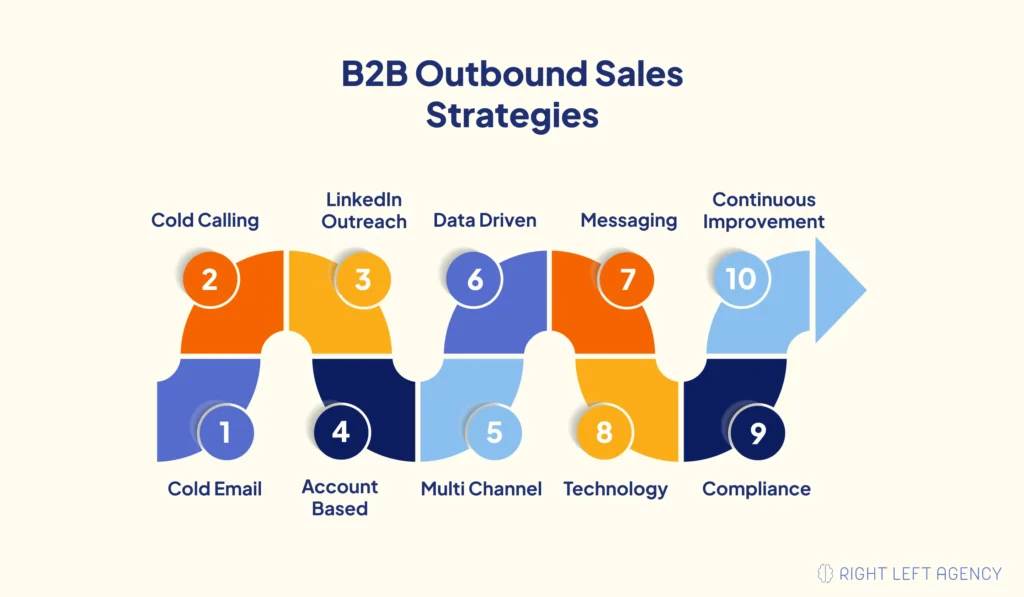
What Are the Best B2B Outbound Sales Strategies?
B2B outbound sales strategies are structured methods that help sales teams attract, engage, and convert potential clients through proactive outreach. These strategies define how to identify prospects, craft messages, and sequence communication for the best results.
Each of the following strategies plays a role in one connected outbound motion. They can be used separately or combined depending on your goals. You will find stories, context, and examples to help you adapt them to your situation.
1. Cold Email Strategy
A cold email strategy is a planned approach to reaching out to potential clients through personalized emails without prior contact. The goal is to capture attention, create relevance, and start a dialogue that could lead to a sale.
Cold email is one of the simplest and most direct ways to reach decision makers. When done with care, it builds curiosity and opens doors to new conversations. The key is keeping it personal, relevant, and clear. Focus on one specific challenge your prospect faces and show that you understand it.
A good cold email feels like it was written for one person. Avoid long introductions or feature lists. Instead, talk about a real business situation and suggest a small next step. Keep testing your subject lines and message angles to see which ones drive the best replies. The goal is to create a conversation, not close a deal in one message.
Tools to Use: Lemlist, Mailshake, Woodpecker
Why: Personalization at scale, A/B tests, warm-up features
Track: Open %, reply %, positive reply %
2. Cold Calling Strategy
Cold calling is the practice of directly calling prospects who have not previously interacted with your business. It helps establish immediate contact, gather feedback, and gauge interest quickly.
Cold calling gives you real time feedback. It allows you to learn about priorities, objections, and interest levels directly from the source. Start every call with clarity and respect for their time. Explain who you are and why you are calling, then connect it to a challenge that matters to them.
Keep the conversation short unless they want to go deeper. Focus on listening more than talking. Take notes on what resonates so you can refine your pitch. Cold calling works best when you are genuine and show that you care about solving their problem.
Tools to Use: RingCentral, Aircall, Outreach.
Why: Power dial, recordings, call analytics.
Track: Connect rate, meetings per 100 dials.
Learn: A B2B Marketing Funnel: All You Need to Know for Building a Funnel
3. LinkedIn Outreach Strategy
LinkedIn outreach is a targeted communication approach using the LinkedIn platform to connect with and engage potential buyers. It involves building familiarity through content interactions before initiating direct messages.
LinkedIn is a space where professionals already share their ideas, which makes it perfect for warm outreach. Before sending any message, spend some time engaging with your prospect’s posts. Comment thoughtfully, share insights, and build familiarity.
Once you have interacted a few times, send a short connection note that feels natural. Avoid making a sales pitch right away. Instead, ask a question or share something useful that fits their role. The goal is to build trust and start a genuine conversation that leads to future opportunities.
Tools to Use: LinkedIn Sales Navigator, Expandi, Zopto.
Why: Precise targeting + safe automation.
Track: Connection accept %, DM reply %.
4. Account Based Strategy
An account based strategy in B2B outbound sales is an approach that targets specific high value accounts rather than casting a wide net. It focuses on multiple stakeholders within each account to build consensus and drive large deals.
Account based selling focuses on a few high value accounts instead of hundreds of leads. You build multiple relationships within one company, targeting different decision makers who share a goal. This strategy helps you understand the full picture of how a buying decision happens. This approach is a key part of modern B2B growth strategies where companies focus on targeted accounts instead of broad outreach.
Start by mapping out who influences the purchase. Craft messages that speak to each role’s specific needs. The finance leader may care about cost, while the operations head focuses on efficiency. Align your outreach across the team to create momentum within the account. This is how you move large deals faster and with less friction.
Tools to Use: Demandbase, Terminus, Salespanel
Why: Account intent, ads, multi-stakeholder mapping
Track: Account engagement score, pipeline per target account
5. Multi Channel B2B Outbound Marketing Strategy
A multi channel outbound marketing strategy is the practice of using multiple communication channels such as email, phone, social media, and direct mail to engage prospects. It increases visibility and improves conversion by reaching buyers through their preferred platforms.
Using multiple channels increases your chances of being seen and remembered. A multi channel strategy combines email, calls, LinkedIn touches, and sometimes even direct mail or video messages. Each touchpoint builds on the last, giving your audience more ways to respond.
Plan your outreach over a two or three week period. Do not flood their inbox or voicemail. Keep each message consistent and relevant. Over time, you will see which channels work best for different types of prospects. This variety keeps your outbound approach balanced and effective.
Tools to Use: HubSpot, Reply.io, Salesloft
Why: Unified sequences across email/LI/calls
Track: Touch → meeting conversion, channel-level lift
6. Data Driven Strategy for B2B Outbound Sales Optimization
A data driven strategy means using accurate, real time information to guide your outreach decisions. It helps refine targeting, messaging, and timing to make outbound campaigns more efficient and impactful.
Data keeps your outbound program accurate and efficient. Clean, verified data ensures your messages reach the right people at the right time. Start by cleaning your CRM and updating missing details like titles and company information. When your data is solid, every outreach effort performs better.
Track your replies and meetings booked, and look for patterns. If a certain trigger or message angle works well, build on it. Data driven outbound helps you focus on what actually converts instead of relying on guesswork.
Tools to Use: ZoomInfo, SalesIntel, Clearbit
Why: Accurate firmographics/technographics, intent
Track: Bounce rate, ICP match %, SQL rate
7. Messaging Strategy
A messaging strategy defines how a business communicates its value proposition to prospects. It focuses on crafting clear, relatable, and persuasive messages that align with the buyer’s needs and goals.
Your message determines whether a prospect feels understood or ignored. Clear messaging speaks directly to their situation. Describe their challenge in simple terms and explain how your solution creates relief or results.
Instead of pitching features, tell a short story that mirrors their experience. End with an easy question that invites a response. Great messaging shows empathy and clarity, not pressure. When your tone feels conversational and human, prospects are more likely to reply.
Tools to Use: Lavender, Grammarly Business, Copy.ai
Why: Coaching for clarity + personalization helpers
Track: Positive reply %, time-to-first-reply
8. Technology and Automation Strategy
A technology and automation strategy involves using software tools to streamline outbound sales processes. It helps automate repetitive tasks, maintain consistency, and provide better visibility into sales performance.
Technology helps you scale without losing the human touch. Tools like CRMs, sequencing platforms, and dialers automate repetitive tasks so you can focus on actual selling. Start small with just the tools you need, and add more as your process grows.
Automation should make your outreach smoother, not robotic. Review your system regularly to prevent errors or duplicate messages. Use technology to stay organized, but let your personality drive the conversation.
Tools to Use: HubSpot CRM, Zapier, Artisan
Why: Workflow automation, syncing, AI BDR support
Track: Time saved/rep, SLA adherence
9. Compliance and Deliverability Strategy
A compliance and deliverability strategy ensures that your outreach follows email laws and best practices so messages reach recipients’ inboxes safely. It protects your sender reputation and maintains trust with your audience.
Deliverability ensures your hard work reaches the inbox. Compliance keeps your outreach ethical and within regulations. Set up domain authentication protocols like SPF, DKIM, and DMARC. Always include clear unsubscribe options and clean your lists frequently.
Avoid spam triggers by keeping your messages natural and relevant. Consistency in tone, volume, and respect for privacy builds long term trust. Good compliance is not just a rule, it is a sign of professionalism.
Tools to Use: NeverBounce, Warmup Inbox, Mailflow
Why: List hygiene, domain warm-up, best practices
Track: Deliverability %, spam complaints, inbox vs. promo
10. Continuous Improvement Strategy
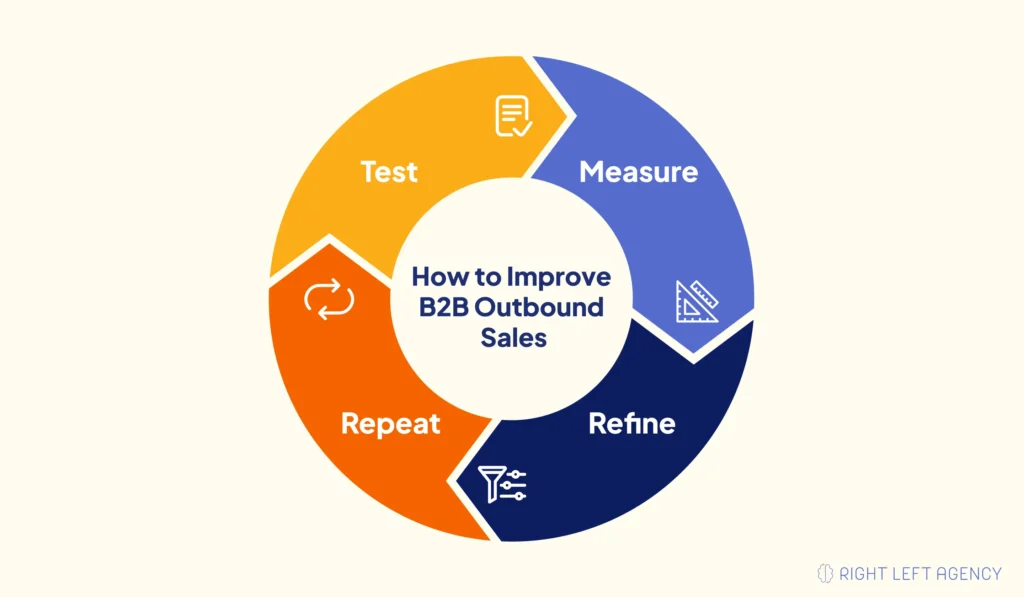
A continuous improvement strategy refers to an ongoing process of testing, learning, and refining sales tactics to improve performance. It ensures your outbound efforts stay effective as market dynamics evolve.
This strategy follows a circular process that keeps your sales motion improving continuously. It starts with Test, where new ideas such as email angles, call times, or sequence lengths are tried. The next step is Measure, where you track outcomes like reply rates, meetings booked, or conversion percentages. Then comes Refine, where you analyze results and make small adjustments to improve performance. Finally, you Repeat the cycle, ensuring that every iteration builds on what you’ve learned before.
Improvement never stops in outbound sales. The teams that win are those who test, learn, and adjust continuously. Run small experiments with new subject lines or calling times. Share what works within your team and build on those lessons.
Regular reviews help you identify strengths and weaknesses. Celebrate small wins and refine the process together. As your outbound motion matures, scaling becomes easier because your team understands what really works.
Tools to Use: Gong, Chorus, VWO/Optimizely
Why: Call intelligence + page/message A/B tests
Track: Win rate, cycle length, incremental test lift
Inbound vs. Outbound Sales: What’s the Difference?
The core difference between inbound and outbound sales is who initiates contact, the buyer or the seller. Inbound sales attract interested buyers to you, while outbound sales involve reaching out to prospects who may not yet know your brand.
Inbound sales is a strategy where potential customers initiate contact with your business after discovering it through marketing channels like SEO, content, or social media.
- Buyer-initiated: Leads discover your business through marketing or content.
- Funnel flow: Awareness to Interest to Consideration to Intent to Evaluation to Purchase.
- Tactics used: SEO, content marketing, social media, paid ads, webinars.
- Sales rep role: Actively listen, guide, and close once prospects show intent.
- Best for: Companies with strong online presence or widely searched products.
- Sales cycle: Usually shorter, as buyers are already interested.
Outbound sales is a proactive sales approach where your team reaches out to potential customers through methods such as cold emails, cold calls, or LinkedIn outreach.
- Seller-initiated: Sales reps contact potential customers directly.
- Funnel flow: Similar stages, but awareness must first be created by the rep.
- Tactics used: Cold emails, cold calls, LinkedIn outreach, trade shows.
- Sales rep role: Research prospects, personalize pitches, educate, and build trust.
- Best for: B2B or niche solutions that need explanation or education.
- Sales cycle: Typically longer, but targets higher-value prospects.
Inbound and outbound sales work best when they complement each other. Inbound builds long-term credibility and organic demand, while outbound drives targeted outreach and faster pipeline growth. Combining both strategies creates a balanced sales engine that attracts, engages, and converts high-quality B2B leads consistently.
Common Challenges and How to Avoid Them
Common challenges are mistakes that reduce outbound effectiveness. Recognizing and correcting them early prevents wasted effort and damaged relationships.
Do not rely on mass sending. Narrow your target audience and triggers. Do not over automate because it removes the personal touch. Review templates often to keep them fresh. Always maintain list hygiene and monitor deliverability.
Track meaningful metrics like replies, meetings, and opportunities. Engage several stakeholders early to improve win rates.
If you want support, Right Left Agency can help you design outbound systems, map buying committees, and coach your team for growth.
Frequently Asked Questions
1. How Often Should I Refresh My Prospect List?
Your prospect list should be refreshed at least once every quarter. Markets change quickly, and job roles or company structures shift often. Regularly validating your list helps you maintain accuracy and avoid wasted outreach on outdated contacts. Enrich your data with new insights such as funding rounds, hiring spikes, or tech stack changes. This habit ensures you always reach relevant prospects with timely messages.
2. What Metrics Indicate a Successful Outbound Campaign?
A successful outbound campaign is not judged only by meetings booked, but also by the quality of engagement. Look at metrics like positive reply rate, meetings held, conversion to pipeline, and deal velocity. Track how many contacts become opportunities and which outreach channels perform best. Over time, these numbers show which strategies are sustainable and where you should focus your resources.
3. How Can I Personalize Without Spending Too Much Time?
Personalization does not mean writing every message from scratch. Focus on role-based personalization instead of individual trivia. Create templates that speak to specific industries or roles and adjust a few lines based on context or recent events. Using tools that insert dynamic variables like company name, role, or trigger event can help you stay personal while saving time.
4. What Are the Signs of Poor Deliverability?
Poor deliverability often appears as a sudden drop in open or reply rates, an increase in bounces, or messages landing in spam folders. Check domain reputation tools to ensure your sender score is healthy. Review your email content for spammy phrases and confirm that authentication protocols like SPF, DKIM, and DMARC are correctly configured. Maintaining a clean list and balanced sending frequency helps prevent deliverability issues.
5. How Do I Train New Sales Reps for Outbound Success?
New reps learn best through observation and repetition. Start with shadow sessions where they listen to experienced team members make live calls or review message templates. Provide playbooks with real examples of effective emails and talk tracks. Encourage them to personalize within the framework and review their early results weekly. Continuous feedback and small, focused improvements build confidence and skill.