Key Takeaways
- SaaS demand generation is not just lead collection. It builds awareness, trust, and buying intent among the right accounts.
- Demand generation, lead generation, and demand capture are different but must work together to create a consistent pipeline.
- The strongest SaaS demand generation programs cover the full journey: demand creation, demand capture, nurturing, sales handoff, retention, and expansion.
- Channel selection should depend on ICP, deal size, buying stage, and company maturity.
- Measure demand generation by pipeline quality, SQLs, opportunities, CAC, LTV, and revenue influenced — not just traffic or MQL volume.
A SaaS team spends months publishing content, running LinkedIn ads, and hosting webinars. Demo requests trickle in, and sales follow up. But three months later, the pipeline still looks thin, and leadership is asking why qualified opportunities are not showing up.
If that sounds familiar, the problem is rarely budget or effort. It is usually a demand generation strategy that is incomplete, poorly targeted, or focused on the wrong outcomes.
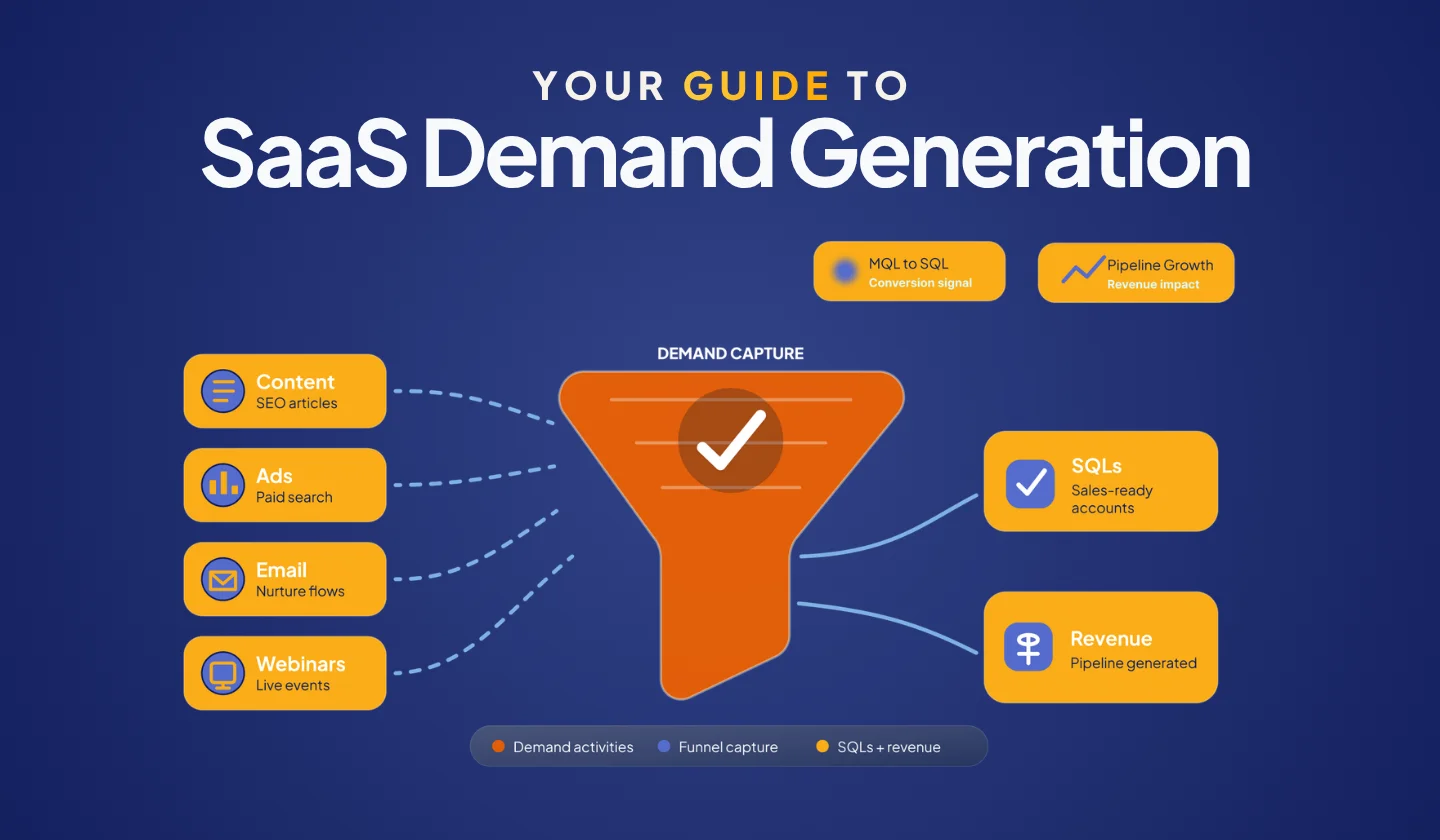
SaaS demand generation is the process of creating awareness, interest, and buying intent for a software product before prospects are ready to speak with sales. It combines content, SEO, paid media, email, webinars, product education, and sales alignment to turn target accounts into a qualified pipeline.
In this guide, we cover how SaaS demand generation works, how it differs from lead generation, which channels drive the best results, and how to build a full-funnel strategy from scratch.
What Is SaaS Demand Generation?
SaaS demand generation is not about collecting as many leads as possible. It is about finding the right people, educating them, building trust, and creating genuine buying intent among the accounts that actually fit your product.
In simple terms, SaaS demand generation helps the right buyers understand the problem, trust your point of view, and see your product as a serious option before they are ready to buy.
Most B2B SaaS companies sell to buying committees, not individuals. The CFO, IT lead, end user, and department head may all evaluate the product from different angles. Demand generation addresses all of them, not just the person who fills out a form.
At its core, SaaS demand generation covers the full journey from someone not knowing your product exists to them actively requesting a demo or starting a trial. It includes both creating demand among people who are not yet searching and capturing demand from people who already are.
In SaaS, demand generation should also support existing customers through education, adoption, retention, and expansion campaigns. The pre-sale and post-sale journeys are both part of the same system.
Here is what a well-built SaaS demand generation program usually includes:
- Educating your target market about the problem your product solves
- Creating awareness among buyers before they enter an active buying cycle
- Capturing existing demand through search, review sites, and comparison content
- Nurturing leads and accounts through email, retargeting, and product education
- Supporting sales conversations with relevant content and context
- Measuring pipeline generated and revenue influenced, not just lead volume
In most B2B SaaS buying journeys, prospects interact with multiple educational, comparison, and validation assets before they ever speak to sales. That is why demand generation needs to support the entire research process, not just the final demo request.
SaaS Demand Generation vs. Lead Generation vs. Demand Capture
These three terms get used all the time interchangeably, but they describe very different things. Mixing them up leads to misaligned strategies and campaigns that look busy but produce poor pipeline quality.
| Concept | Main Goal | Example | Where It Fits |
|---|---|---|---|
| Demand Generation | Create awareness and buying interest | A webinar that educates security leaders on a compliance challenge | Full funnel, especially top |
| Lead Generation | Collect contact information | A gated whitepaper with a form | Middle funnel |
| Demand Capture | Convert buyers already searching | SEO landing pages, paid search, G2 presence | Bottom of funnel |
For example, a LinkedIn post about a common compliance problem creates demand. A gated checklist captures a lead. A “best compliance software” landing page captures existing demand from buyers already comparing solutions.
Demand generation is the broadest category. It creates the conditions where lead generation and demand capture can work. Without it, you are fighting for the attention of a small group of buyers already in-market, while ignoring the much larger group that will be in-market in 6 to 12 months.
SaaS companies need all three working together. Lead generation without demand creation can fill your CRM with contacts who are not ready to buy. Demand capture without demand creation limits your pipeline to whoever already knows they need a solution. And demand generation without any capture or conversion mechanism leaves a lot of potential revenue on the table.
💡Pro Tip: If your sales team is complaining about lead quality, the issue may not be solved by adding more forms or gated content. First, check whether your target market understands the problem, trusts your point of view, and fits your ICP.
Why Demand Generation Matters for SaaS Companies
SaaS companies face a specific set of challenges that make demand generation more important than in almost any other business model.
First, buyers rarely move quickly. Many B2B SaaS sales cycles span weeks or months, especially as deal size increases. For a sales-led SaaS company with a six-month sales cycle, the demand generation work that influences a deal often starts long before the demo request appears in the CRM. During that time, buyers are researching, comparing alternatives, getting internal buy-in, and evaluating risk. If your brand is not present throughout that journey, you lose deals you never even knew you were competing for.
Second, subscription revenue amplifies both success and failure. A strong pipeline means predictable ARR growth. A weak pipeline can create pressure across the revenue team, especially when companies rely too heavily on discounts, poor-fit customers, or rushed acquisitions to hit short-term targets.
Here is why investing in SaaS demand generation properly pays off:
- Buyers conduct most of their research before ever talking to sales
- Multiple stakeholders are involved, each needing different information
- Trust takes time to build in competitive software categories
- CAC pressure increases as the company scales
- Pipeline quality matters more than pipeline volume for sales efficiency
- Short-term paid acquisition alone creates a fragile revenue engine
- Long-term brand awareness can reduce dependence on paid channels over time when supported by strong content, clear positioning, and consistent demand capture
A SaaS company that builds demand generation well does not just fill the pipeline. It builds a predictable revenue engine where marketing, sales, and customer success all work from the same strategy.
How the SaaS Demand Generation Funnel Works
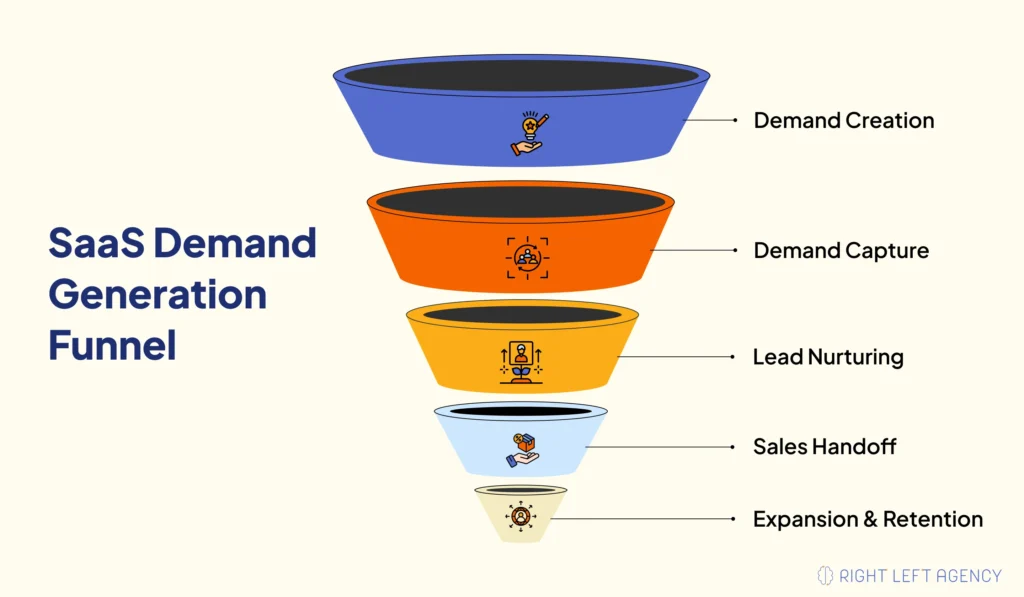
SaaS demand generation is not a single campaign or a single channel. It works across the full buyer journey, from a prospect’s first exposure to your brand all the way through to closed-won and expansion.
Demand Creation
This is the part of the funnel most teams underinvest in. Demand creation is about reaching buyers before they are actively searching for a solution. That means meeting them where they already are: LinkedIn, industry podcasts, newsletters, thought leadership articles, and webinars.
A cybersecurity SaaS might publish original research on vulnerability trends and have its CISO share commentary on LinkedIn. A project management tool might create a podcast on remote team leadership. Neither piece is selling directly, but both position the brand in front of decision-makers who will eventually need what they offer.
Demand creation builds category awareness, not just product awareness. When done well, it can make sales conversations more productive because prospects arrive with more context and trust.
Demand Capture
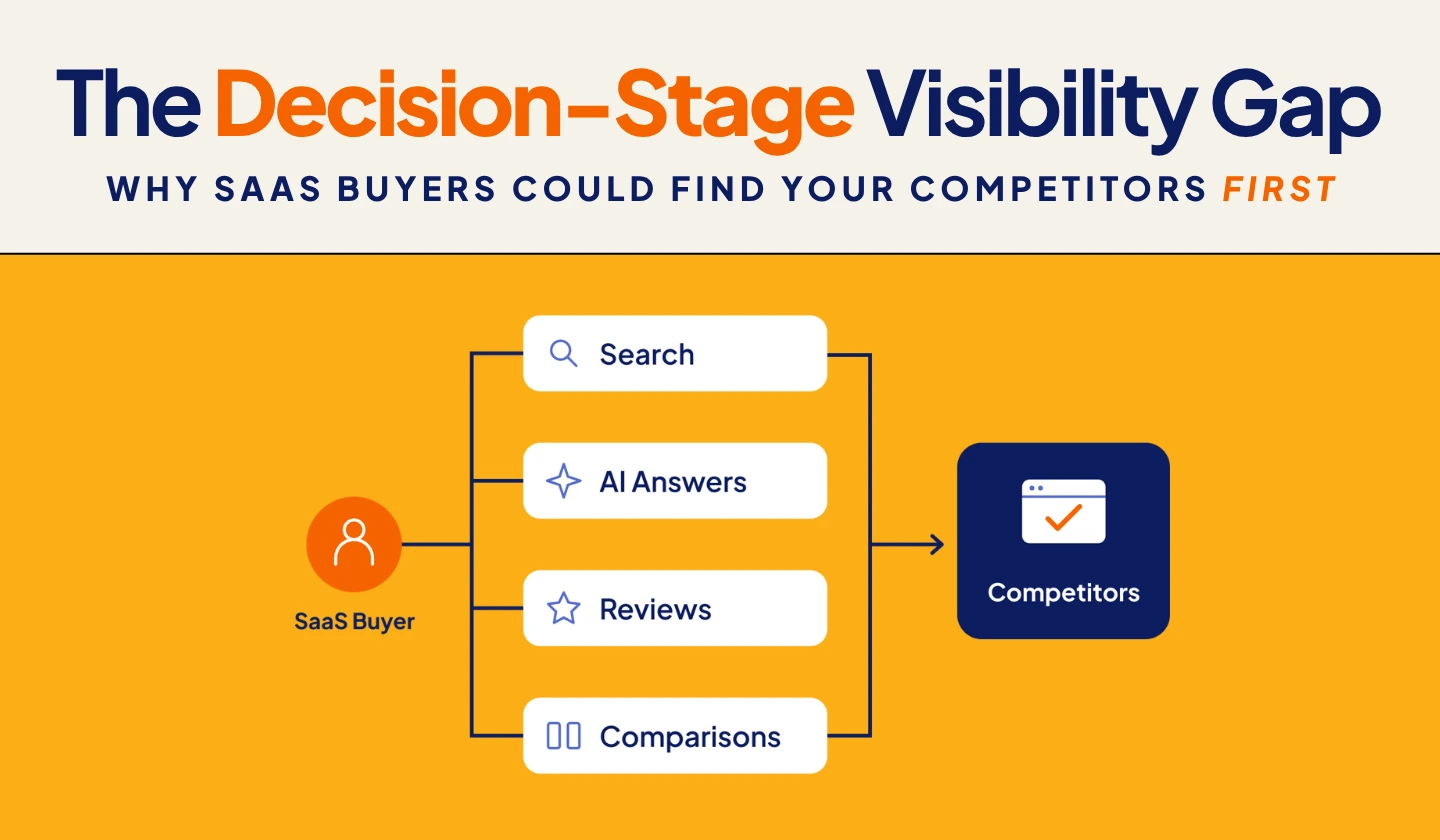
Demand capture focuses on buyers who are already searching. These people know they have a problem and are looking for a solution. They are typing queries into Google, browsing G2, or comparing tools on Capterra.
This is where SEO landing pages, comparison pages, paid search, and review site presence do the heavy lifting. The goal is to be visible and credible exactly when a buyer is ready to evaluate options.
Lead Nurturing
Not everyone who downloads a guide or attends a webinar is ready to buy next week. Lead nurturing keeps your brand relevant through the consideration phase through email sequences, retargeting ads, case study content, and product education.
A good nurturing program moves prospects from awareness to genuine interest without requiring sales to chase every cold contact. It qualifies buyers over time, so that when they do reach out, the conversation starts from a much stronger position.
Sales Handoff
Demand generation does not stop at generating interest. It includes making sure the right information reaches the sales team at the right moment. When marketing passes a lead or account to sales, context matters: what content did they engage with, what pages did they visit, what webinars did they attend?
A clean handoff process through your CRM, HubSpot, or Salesforce ensures sales can have a relevant first conversation instead of starting from scratch.
Expansion and Retention
SaaS demand generation also extends post-sale. Customer education, product updates, webinars for existing users, and upsell campaigns all support expansion revenue and reduce churn. The best SaaS demand generation programs treat the customer journey as a loop, not a straight line.
💡Pro Tip: Most SaaS teams treat demand generation as a pre-sale function. But some high-impact demand generation activity happens post-sale. A customer who gets ongoing value through webinars, educational emails, and product education renews at a higher rate and expands their account faster. Build demand gen for your existing customers, too.
Funnel Overview
| Funnel Stage | Goal | Example Tactics | Main Metrics |
|---|---|---|---|
| Demand Creation (TOFU) | Build awareness and interest | Thought leadership, LinkedIn, webinars, podcasts | Reach, engagement, brand search volume |
| Demand Capture (BOFU) | Convert in-market buyers | SEO, paid search, G2, comparison pages | Demo requests, trial signups, SQLs |
| Lead Nurturing (MOFU) | Move prospects toward purchase | Email sequences, retargeting, case studies | MQL to SQL conversion, engagement rate |
| Sales Handoff | Enable sales conversations | CRM context, lead scoring, sales alerts | SQL to opportunity rate |
| Expansion & Retention | Grow existing accounts | Customer webinars, upsell campaigns | Expansion MRR, NPS, retention rate |
Best SaaS Demand Generation Channels
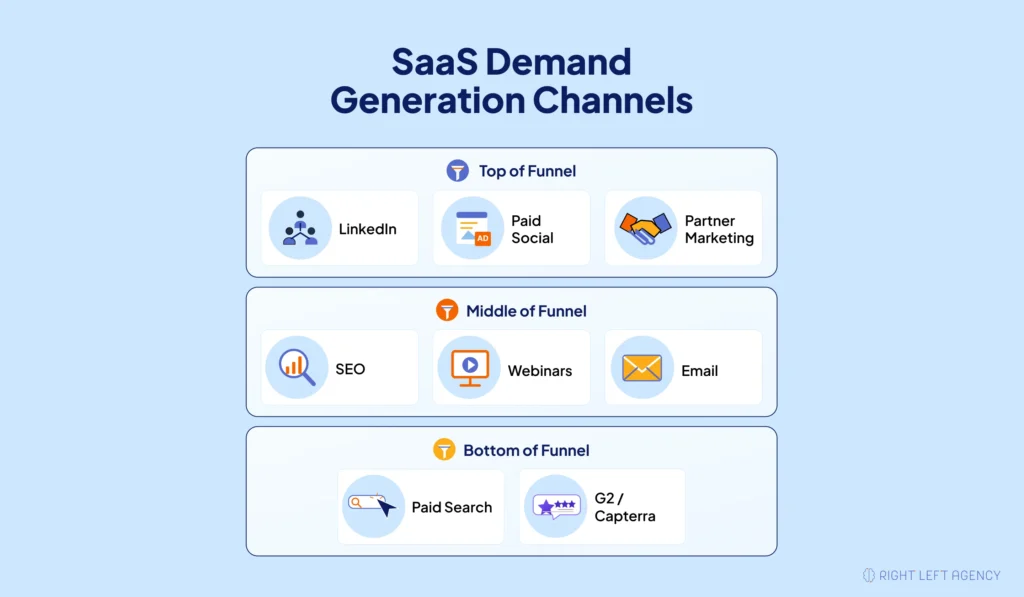
Not every channel works for every SaaS company. The right mix depends on your ICP, deal size, sales motion, and stage of growth. Here is what each major channel is best for and when to prioritize it.
Not sure which channel to start with? Here is a quick guide:
| Situation | Best Starting Channel |
|---|---|
| Buyers are already searching | SEO + paid search |
| The category is new or misunderstood | LinkedIn + webinars |
| Enterprise ACV is high | ABM + LinkedIn Ads |
| Product has strong self-serve value | Free tools + product-led content |
| Sales needs warmer conversations | Webinars + email nurturing |
SEO and Content Marketing
SEO is one of the most cost-efficient demand capture channels available to a SaaS company. It targets buyers who are actively searching for solutions. Done well, it builds compounding traffic and a pipeline that does not disappear when you pause ad spend.
For SaaS demand generation, the most valuable SEO content includes product-led posts that show what the product actually does, comparison pages targeting competitor or category queries, use-case pages tailored to specific industries or roles, and integration pages that capture buyers searching for compatible tools.
If organic search is already driving traffic but not pipeline, start by reviewing your SaaS SEO strategy and identifying which pages support high-intent demand capture.
The goal is not just traffic. It is content that attracts the right ICP and moves them toward a trial, demo, or deeper engagement.
LinkedIn and Organic Social
LinkedIn is often one of the strongest demand creation channels for B2B SaaS companies, especially when your ICP includes founders, executives, department heads, or technical decision-makers.
The content that works on LinkedIn tends to be founder-led posts, executive thought leadership, and employee advocacy. Sharing data-backed insights, honest takes on industry challenges, and behind-the-scenes looks at how the product gets built all tend to outperform product promotions. LinkedIn builds familiarity and trust over time, which makes sales conversations shorter and easier.
That said, LinkedIn needs strong messaging and clear ICP targeting to avoid wasted spend. Without both, even well-funded campaigns will generate low-quality engagement.
Paid Search
Paid search is where you capture buyers who are already in-market. Google Ads on high-intent keywords, competitor terms, and category terms can generate qualified demo requests quickly.
Paid search works best when buyers already search for category, competitor, or problem-aware terms. It is weaker for creating demand in a category that buyers do not yet understand. The downside is cost. Competitive SaaS categories often have high CPCs, so paid search requires strong messaging, tight targeting, and proper landing page optimization to deliver a reasonable CAC.
Pair it with a solid SaaS paid search strategy to get the most out of your ad spend.
Paid Social
LinkedIn Ads and other paid social channels work differently from paid search. Instead of capturing existing demand, they create it. Sponsored content, retargeting campaigns, and account-based ads help you reach your ICP with educational content, reports, and product education before they start actively searching.
LinkedIn Ads are particularly effective for enterprise SaaS with a defined ICP and a higher ACV, where the economics justify paying for targeted reach.
Webinars and Virtual Events
Webinars remain one of the highest-engagement formats in B2B SaaS demand generation. A well-run webinar on a real industry challenge attracts buyers who are interested enough to spend an hour with you. That is a much stronger intent signal than a content download.
The best SaaS webinars are educational first. They address a specific pain point, bring in credible speakers, and give attendees genuine value without turning the entire session into a product demo. Sales can then follow up with context from the webinar attendance.
Email Nurturing
Email is the channel that keeps working between a prospect’s initial interest and their eventual purchase decision. A structured nurture sequence keeps your brand visible, moves prospects through the funnel, and surfaces the most engaged contacts for sales follow-up.
The key to effective email nurturing for SaaS is segmentation. A CFO evaluating a $50K annual contract needs different content than a team lead exploring a self-serve plan. Use your CRM and marketing automation platform to serve each segment what is actually relevant to them.
Review Sites and Partner Marketing
G2 and Capterra are where buyers go to validate a decision they are already close to making. A strong presence on these platforms, with genuine reviews and clear positioning, captures demand at the moment of highest intent.
Partner marketing, co-marketing with complementary tools, and marketplace listings extend your reach into audiences you could not build alone. An integration with a popular CRM or analytics platform can put your product in front of thousands of relevant buyers without additional ad spend.
Channel Summary
| Channel | Best For | Funnel Stage | Example KPI |
|---|---|---|---|
| SEO / Content | Long-term demand capture | TOFU to BOFU | Organic demo requests |
| LinkedIn Organic | Demand creation with ICP | TOFU | Engagement, follower growth |
| Paid Search | High-intent demand capture | BOFU | CPA, SQL volume |
| LinkedIn Ads | Targeted demand creation | TOFU to MOFU | CPL, pipeline influenced |
| Webinars | Education, lead quality | MOFU | Attendee-to-SQL rate |
| Email Nurturing | Lead progression | MOFU | MQL to SQL conversion |
| G2 / Capterra | Late-stage validation | BOFU | Review click-to-demo rate |
| Partner Marketing | New audience reach | TOFU to MOFU | Referral pipeline |
SaaS Demand Generation Strategies by Company Stage
What works for an enterprise SaaS company with 300 employees does not work for an early-stage startup with three people in marketing. The right strategy scales with the company.
A common mistake is copying enterprise demand generation tactics too early. A seed or Series A SaaS company usually needs sharper ICP validation, founder-led content, and BOFU demand capture before scaling complex ABM or large paid programs.
| SaaS Stage | Main Goal | Best Channels | Priority Metrics | Avoid |
|---|---|---|---|---|
| Early-Stage | ICP validation, early pipeline | Founder content, direct outreach, SEO basics, community | Demo requests, ICP fit rate | Scaling paid ads before messaging is validated |
| Growth-Stage | Scale pipeline, reduce CAC | Paid search, LinkedIn Ads, lifecycle email, webinars | Pipeline generated, SQL volume, CAC | Chasing lead volume without SQL quality checks |
| Enterprise | ABM, multi-stakeholder coverage | ABM programs, field events, executive content, analyst relations | Pipeline by account, win rate, deal size | Running generic campaigns for complex buying committees |
Early-Stage SaaS
In the early stages, demand generation is as much about learning as it is about growing. Focus on founder-led content that builds trust and attracts the right ICP, direct outreach to target accounts, early SEO foundations, and community participation in spaces where buyers gather.
Customer proof matters enormously at this stage. Even two or three strong case studies can dramatically change conversion rates. Do not try to scale paid acquisition before you have messaging that clearly resonates with your ICP.
Growth-Stage SaaS
Growth-stage companies can start investing in scalable channels. Paid acquisition becomes viable when there is enough data to optimize targeting and messaging. Lifecycle email programs, comparison pages, and webinars all work well here.
Sales and marketing alignment becomes critical at this stage. As lead volume increases, without a clear handoff process, pipeline quality suffers even when the numbers look strong.
Enterprise SaaS
Enterprise demand generation is less about volume and more about precision. ABM programs target specific named accounts with personalized, multi-touch campaigns. Field events, executive roundtables, and analyst relations all build the credibility and relationships needed to win large deals.
The sales cycle is longer, and marketing needs to stay visible and relevant throughout. Coordinated, multi-channel campaigns tied to specific accounts are what drive the enterprise pipeline.
Key SaaS Demand Generation Metrics to Track
Vanity metrics are easy to report and hard to defend. Traffic, impressions, and follower counts tell you something about reach, but they do not tell you whether your demand generation is actually building a pipeline.
Here are the metrics that actually matter:
| Metric | What It Shows | Why It Matters |
|---|---|---|
| Website traffic from target accounts | Are the right companies visiting? | Quality over quantity |
| Demo requests | Direct pipeline intent | Primary BOFU conversion signal |
| Trial signups | Product interest from the target ICP | PLG conversion starting point |
| MQLs | Marketing-qualified lead volume | Top of the sales funnel health |
| SQLs | Sales-ready lead volume | Handoff quality and quantity |
| Opportunities created | Pipeline entering sales process | Revenue potential |
| Pipeline generated | Total pipeline value attributed | Business impact of demand gen |
| CAC | Cost to acquire a customer | Efficiency of spend |
| LTV | Lifetime value of a customer | ROI on acquisition |
| Conversion rate by funnel stage | Where prospects drop off | Identifies gaps and friction |
| Sales cycle length | Time from first touch to close | Efficiency of the buyer journey |
| Win rate | Percentage of opportunities closed | Sales and marketing alignment quality |
| Revenue influenced | Total revenue touched by demand gen | Full-funnel business impact |
| CAC payback period | Time to recover acquisition cost | Unit economics health |
Do not evaluate metrics in isolation. High MQL volume with low SQL conversion usually means poor targeting or weak qualification. Strong demo volume with low opportunity creation may point to a sales handoff or messaging problem. High traffic with low target-account engagement may mean your content is attracting the wrong audience.
Which metrics should you focus on first?
If you are early-stage, focus first on demo requests, ICP fit rate, and sales conversations. If you are growth-stage, prioritize SQLs, opportunities created, CAC, and pipeline generated. If you are an enterprise, track account engagement, opportunity progression, win rate, and pipeline by target account.
The right set of metrics also depends on your sales motion. A product-led growth company will prioritize trial signups and activation rates. A sales-led SaaS will track SQLs, opportunities, and pipeline generated. A hybrid motion needs to be tracked separately and then reconciled at the revenue level.
How to Build a SaaS Demand Generation Strategy
Building a demand generation strategy is not about picking the most popular channels and running campaigns. It starts with clarity on who you are targeting and what needs to happen for them to buy.
Before you start, collect three inputs: your best-fit customer profile, your current CRM conversion data, and the main objections sales hears during discovery calls. These three things will shape every decision that follows.
Here is a step-by-step process that works:
1. Define your ICP. Be specific. Industry, company size, role, team structure, technology stack, and key pain points. The more precise your ICP, the more effective every downstream decision becomes. Vague targeting produces vague results.
2. Map the buyer journey. Understand how your target buyers discover, evaluate, and buy software. Where do they go for information? Who is involved in the decision? What does a typical 60-day buying process look like for them?
3. Clarify your positioning and messaging. What does your product do that alternatives do not? What is the core value proposition for each stakeholder in the buying committee? Weak messaging is the most common reason demand generation underperforms.
4. Choose your demand creation channels. Based on your ICP, decide where to build awareness. LinkedIn, industry publications, podcasts, webinars, and thought leadership content are the most common starting points.
5. Choose your demand capture channels. Build one BOFU content cluster around your highest-intent category, competitor, and use-case keywords before scaling broader awareness content. Establish your presence on G2 or Capterra. Run retargeting ads to stay visible to people who have already found you.
6. Build content for each funnel stage. TOFU content educates and creates awareness. MOFU content builds trust and demonstrates value. BOFU content closes the gap: comparison pages, case studies, ROI calculators, and free trials.
7. Set up lead nurturing. Map out an email nurture sequence for each key ICP segment. Connect your CRM and marketing automation, so leads move through stages based on behavior, not just time.
8. Align marketing and sales. Define what a qualified lead looks like. Agree on lead scoring criteria. Set up a clear handoff process with CRM context. Hold regular pipeline reviews where both teams look at the same data.
9. Track the right metrics. Set up attribution reporting that shows pipeline and revenue influenced by channel and campaign. Track CAC by channel. Review funnel conversion rates monthly, not quarterly.
10. Optimize based on pipeline quality. Do not optimize for MQL volume. Optimize for the channels and campaigns that produce SQLs, opportunities, and closed revenue. Cut what creates noise. Double down on what creates a pipeline.
💡Pro Tip: Before choosing any channel, ask one question: where does our ICP already spend time? That answer should drive your demand creation choices. The best channel is the one your buyers are already using, not the one that is currently trending in marketing circles.
90-Day SaaS Demand Generation Roadmap
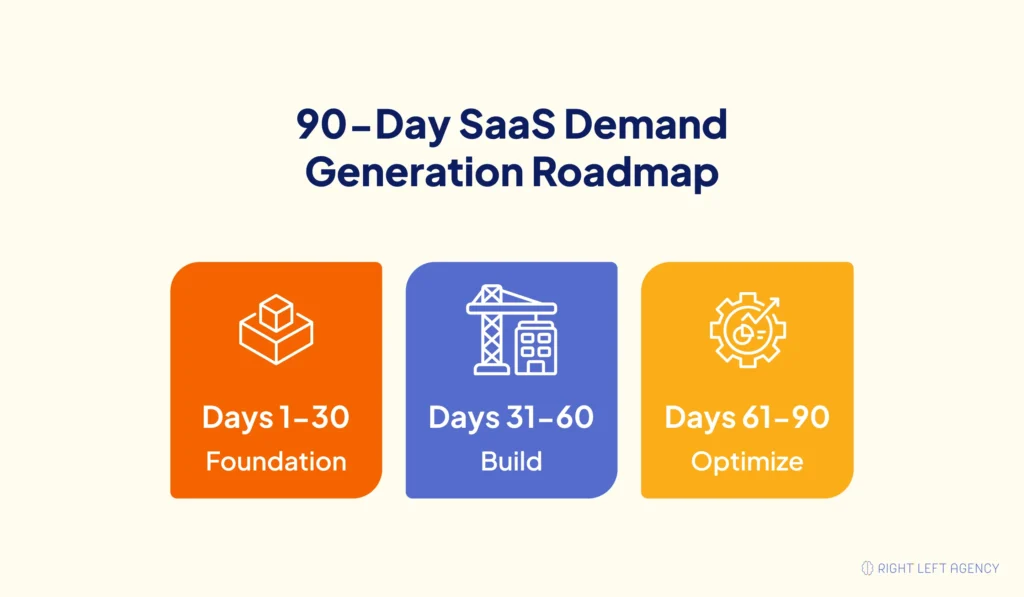
Use this roadmap as a starting point. A company with weak messaging may spend more time on ICP and positioning. A company with clear demand but weak conversion may move faster into landing pages, nurture flows, and sales handoff improvements.
| Timeline | Focus | What to Do |
| Days 1-30 | Foundation | Define ICP, audit current funnel, review CRM data, and identify highest-intent pages |
| Days 31-60 | Build | Create BOFU pages, improve nurture flows, launch retargeting, and align MQL/SQL definitions |
| Days 61-90 | Optimize | Review SQL quality, cut weak campaigns, improve landing pages, and double down on pipeline-producing channels |
Common SaaS Demand Generation Mistakes
Most demand generation programs underperform for a handful of predictable reasons. Avoiding these saves a lot of time and budget.
Mistake: Treating demand generation like lead generation only. Fix: Stop filling your CRM with contacts who are not ready to buy. Demand generation requires educating buyers, not just capturing their email address.
Mistake: Over-gating content. Fix: Most content should be freely accessible to build the brand. Gate strategically for high-value assets only. Putting every guide behind a form reduces both reach and trust.
Mistake: Ignoring demand capture. Fix: Invest in both thought leadership and search visibility at the same time. You need both creation and capture working in parallel.
Mistake: Targeting too broad an audience. Fix: Tighten your ICP definition. If your ICP is “any company with a marketing team,” your ads and content will be diluted and expensive. Tight targeting improves every downstream metric.
Mistake: Optimizing for MQLs instead of the pipeline. Fix: Review campaigns by SQL rate, opportunity creation, and closed-won revenue instead of form fills alone. A campaign that generates 200 MQLs with 2 opportunities is worse than a campaign that generates 30 MQLs with 12 opportunities.
Mistake: Running paid ads without strong messaging. Fix: Clarify your message before scaling spend. Ads amplify your message. If the message is unclear or wrong for the audience, spending more just means faster failure.
Mistake: Not aligning with sales. Fix: Define shared funnel definitions, lead scoring criteria, and a clean handoff process together. Demand generation without sales alignment creates friction that kills pipeline quality.
Mistake: No feedback loop from sales. Fix: Review call notes, objections, lost deal reasons, and lead quality with sales every month. Demand generation gets stronger when campaign learnings and sales conversations feed back into messaging, content, and targeting.
Mistake: Not nurturing leads after the first conversion. Fix: Build automated nurture sequences for every key ICP segment. Most leads are not ready to buy when they first engage. Letting them go cold wastes the initial investment.
Mistake: Measuring only traffic or lead volume. Fix: When leadership asks what demand generation delivered last quarter, the answer should be in pipeline dollars, not page views.
SaaS Demand Generation Examples
Here is how demand generation works in practice across different SaaS models.
Example 1: SEO-Led Demand Capture
A project management SaaS identifies that buyers search for terms like “project management software for remote teams,” “Asana alternative for agencies,” and “project management tool with Slack integration.” The team builds dedicated landing pages for each, complete with use cases, product screenshots, comparison criteria, FAQs, and a clear demo or trial CTA. These pages rank in Google and capture buyers who are already in evaluation mode. Demo requests from these pages convert at a higher rate than paid social traffic because the intent is much higher.
Example 2: LinkedIn-Led Demand Creation
A cybersecurity SaaS company has a CISO who posts weekly on LinkedIn about real-world security challenges, compliance updates, and team structure. The posts are not product pitches. They are educational and practical. Security leaders follow, engage, and share. When those leaders eventually start evaluating security tools, the company is already familiar with them. Sales cycles are shorter, and win rates are higher because trust was built before the first call.
Example 3: Product-Led Demand Generation
A SaaS analytics company offers a free website audit tool that any marketer can use without signing up. The tool delivers real value immediately. Users who see their results and want deeper analysis get invited to start a free trial. The free tool generates a steady flow of signups each month, and a meaningful portion converts to paid plans over time. The product itself becomes the primary demand generation channel.
Example 4: Email Nurture for Long Sales Cycles
A B2B SaaS company selling to operations teams creates a segmented nurture sequence after webinar registration. The sequence sends a problem-focused guide, a case study, a comparison resource, and a soft demo CTA. Leads that engage with BOFU assets are routed to sales with full context in the CRM. Sales enters the conversation knowing exactly what the prospect read, watched, and clicked, which makes the first call much more relevant.
When to Hire a SaaS Demand Generation Agency
Building demand generation in-house makes sense when you have the right team, the right strategy, and enough time to iterate. But there are clear signals that external help could accelerate results.
A SaaS company may benefit from working with a demand generation agency when:
- The internal team lacks experience with specific channels like paid search, ABM, or lifecycle email
- Paid campaigns are running, but not generating a qualified pipeline
- Content exists, but is not converting visitors into demo requests or trial signups
- Sales is consistently asking for better leads, but the root problem is not clear
- The company is entering a new market or launching with a new ICP
- Leadership needs faster testing and execution than the current team can support
- Marketing and sales are not aligned on funnel definitions or pipeline goals
Working with a fractional CMO or specialist consultant can also be a strong middle option. It gives you strategic direction without the full cost of an agency retainer.
In-house vs. agency: what is the right fit?
| Option | Best When | Risk |
| In-house team | You have a strategy, channel expertise, and time to test | Slower execution if the team is small |
| Freelancer or consultant | You need a strategy or a specialized channel | Limited execution capacity |
| Agency | You need strategy, execution, reporting, and speed | Higher cost if goals are unclear |
What to Look for in a SaaS Demand Generation Agency
- Deep experience with B2B SaaS, not just general B2B marketing
- A clear process for ICP definition, messaging, and channel strategy
- Transparency on attribution and pipeline reporting
- References from SaaS companies at a similar stage
- Experience working alongside internal sales teams, not in isolation
- Honest communication about what demand generation can and cannot deliver in a given timeframe
Avoid agencies that promise specific lead volume numbers without knowing your ICP, product, or competitive landscape. Good demand generation is built on strategy and iteration, not on promises made before the first discovery call.
SaaS Demand Generation Checklist
Use this as a quick reference when building or auditing your demand generation program.
Strategy
Define your ICP with specific firmographic and behavioral criteria
Map the buyer journey for each key stakeholder
Clarify your positioning and messaging for the buying committee
Execution
Choose and activate demand creation channels (LinkedIn, webinars, content)
Build demand capture assets (SEO pages, paid search, G2 presence)
Create BOFU content: comparison pages, case studies, ROI tools
Set up email nurture sequences by ICP segment
Connect your CRM and marketing automation for lead tracking
Define MQL and SQL criteria with your sales team
Establish a clear sales handoff process with CRM context
Measurement
Set up pipeline attribution reporting
Track CAC, LTV, and conversion rates by funnel stage
Run a monthly review of pipeline quality by channel
Optimize campaigns based on SQLs and opportunities, not MQL volume
Conclusion
SaaS demand generation works when it treats the buyer journey as a full system, not a collection of disconnected campaigns. Creating demand, capturing it, nurturing it, and handing it off to sales with the right context all need to work together.
The companies that build pipelines consistently invest in both short-term demand capture and long-term brand awareness. They align marketing and sales around pipeline quality, and they measure what actually matters: opportunities created, revenue influenced, and CAC efficiency.
If your SaaS pipeline feels inconsistent, start with a demand generation audit. Identify where buyers drop off, which channels create qualified opportunities, and which gaps are limiting pipeline growth. Then decide whether your next step is better messaging, stronger demand capture, improved nurture, or expert support.
If you want help finding those gaps, explore our SaaS demand generation services or book a strategy call to talk through your funnel.
Frequently Asked Questions
What is SaaS demand generation?
SaaS demand generation is the full-funnel process of creating awareness, building trust, and generating buying intent for a software product among target accounts. It combines content marketing, SEO, paid media, email, webinars, and sales alignment to move buyers from first exposure to qualified pipeline. The goal is not just to collect contacts but to influence the entire buyer journey.
How is SaaS demand generation different from lead generation?
Demand generation creates interest and builds trust across a broad audience, including buyers who are not yet ready to buy. Lead generation captures contact information from people already engaged with your brand. Demand generation is the broader strategy. Lead generation is one of its outputs. Without demand generation, lead generation produces low-quality contacts with little buying intent.
What is the difference between demand creation and demand capture?
Demand creation builds awareness and interest before buyers are actively searching. Demand capture converts buyers who already know they have a problem and are comparing solutions. SaaS companies need both because creation builds future pipeline, while capture turns current intent into demos, trials, and opportunities.
What is a SaaS demand generation strategy?
A SaaS demand generation strategy is a plan for creating awareness, educating target buyers, capturing active demand, nurturing prospects, and converting interest into a qualified pipeline. It usually includes ICP definition, messaging, channel selection, content planning, sales alignment, and performance measurement.
What are the best SaaS demand generation channels?
The most effective channels include SEO and content marketing, LinkedIn organic and paid, Google paid search, webinars, email nurturing, retargeting, and review sites like G2 and Capterra. The right mix depends on your ICP, deal size, and stage of growth. Most SaaS companies need a combination of demand creation channels and demand capture channels to build a balanced pipeline.
How do you measure SaaS demand generation?
The most important metrics are pipeline generated, demo requests, SQL volume, opportunities created, CAC, LTV, win rate, and revenue influenced. Vanity metrics like traffic and impressions provide context but should not be the primary measures of success. Track conversion rates at each funnel stage to identify where buyers are dropping off and where demand generation is working.
How long does SaaS demand generation take to work?
SaaS demand generation can show early signs within a few months, especially through paid search, retargeting, and BOFU content. Longer-term results from SEO, brand awareness, webinars, and nurture programs take consistent testing and optimization. The timeline depends on ICP clarity, deal size, sales cycle length, and channel mix.
Do SaaS companies need a demand generation agency?
Not always. Companies with experienced in-house marketers, clear ICP definitions, and alignment between marketing and sales can build demand generation internally. But if paid campaigns are underperforming, the pipeline is inconsistent, or the team lacks expertise in specific channels, an agency or fractional specialist can add real value. The key is choosing a partner with genuine B2B SaaS experience who can work as an extension of your team, not a vendor managing metrics in isolation.